

Teeth
Teeth whitening at home or in a salon: what can actually help
At-home whitening can alter perceived tooth colour, but within narrow limits. Products sold freely in Switzerland may contain or release no more than 0.1 per cent hydrogen peroxide. Stronger products have different supply and application rules. Salon whitening is a cosmetic service, not dental or medical treatment. Only original product documents can establish whether a specific product complies; this article is not evidence that the product used by Beauty Rocío is compliant.
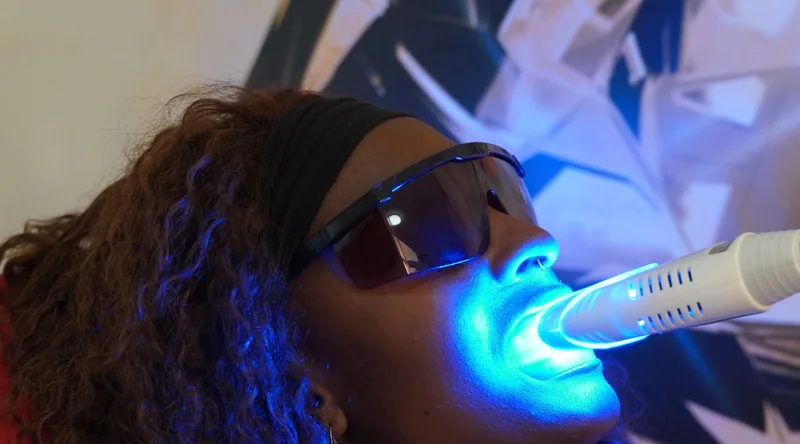
Three routes and how they differ
Peroxide-based products use the same broad oxidation principle; the decisive differences are concentration, professional responsibility and who may examine, diagnose and treat. A shop product is a consumer cosmetic. Dental-practice whitening can include oral examination, professional cleaning, custom trays and management of sensitivity. A beauty salon may provide only a cosmetic application and must not diagnose disease.
| Route | Key limit | What it cannot replace |
|---|---|---|
| Retail/home | up to 0.1% hydrogen peroxide released | dental assessment |
| Beauty salon | cosmetic application only; product-specific compliance must be documented | diagnosis or dental treatment |
| Dentist or dental hygienist | professional route for products above the consumer threshold within the Swiss rules | no promise that restorations will whiten |
How much hydrogen peroxide is permitted
Annex III of EU Cosmetics Regulation 1223/2009 applies through Swiss law and covers hydrogen peroxide as well as compounds that release it, including carbamide peroxide.
Up to 0.1 per cent: freely sold
Consumer oral products may contain or release no more than 0.1 per cent hydrogen peroxide. This is the legal ceiling for freely available cosmetic whitening products.
Above 0.1 to 6 per cent: dentist or dental hygienist
Article 7 of the Swiss Ordinance on Cosmetics, effective from 1 January 2026, governs supply and first use in this range through dentists or dental hygienists. The first application in each cycle occurs under professional responsibility before the remaining product may be supplied to the consumer. Read Article 7 in the official text ↗.
Above 6 per cent: not permitted as a cosmetic in Switzerland
Products releasing more than six per cent are not lawful Swiss cosmetics. Marketing language or a device light does not change the concentration rule. See the FSVO guidance on oral-care products ↗.
What this means for a beauty salon
A beauty salon is not the authorised route for products above 0.1 per cent simply because the client applies the product or an LED lamp is used. Beauty Rocío's service must not be described with a concentration, mechanism or compliance claim until the original product label, safety report, responsible person and declaration documents have been checked. The commercial teeth-whitening page should carry the same limitation. This is a stricter unresolved issue than the device qualification explained for laser hair removal.
What home whitening can do
A Cochrane review of 71 trials found that home chemical whitening can lighten teeth in the short term, but evidence quality was low to very low and did not establish one concentration or delivery method as best. Tooth sensitivity and gum irritation were the common adverse effects.
Strips and gels
Low-concentration products can change shade gradually, but comparisons with products above the Swiss consumer limit do not prove what a Swiss retail product will achieve.
Home-remedy fact check
Activated charcoal
It removes surface stain by abrasion and does not bleach internal tooth colour; abrasiveness and fluoride content matter more than the black appearance.
Baking powder and bicarbonate
Abrasive cleaning can make a surface look lighter while also wearing it. Acids combined with abrasion are particularly unsuitable for enamel.
Whitening toothpaste
It mainly removes external deposits and does not change the colour of dentine. That can still help when coffee, tea or tobacco stain is the problem.
Assess staining before whitening
External stain may respond better to professional cleaning than bleaching. Fillings, crowns and veneers do not whiten, so an uneven result is predictable. A dark tooth can also have a medical cause, including loss of vitality, which needs dental assessment. A beauty salon can observe visible restorations cosmetically but cannot diagnose them.
What light and high concentration do not prove
A systematic review and meta-analysis of randomised trials found no meaningful colour advantage from light activation and no reduction in sensitivity risk. Higher peroxide concentration can increase sensitivity without a proportionate final-colour benefit. Blue light is therefore not evidence that a salon service is stronger, safer or lawful.
When whitening does not help or may harm
Fillings, crowns and veneers
Restorative materials do not bleach. Whitening surrounding natural teeth can make a mismatch more visible.
Sensitive teeth and exposed roots
Whitening commonly causes temporary sensitivity; exposed roots and existing pain call for dental assessment first.
When not to whiten
- With tooth decay or inflamed gums: these need treatment, not concealment.
- During pregnancy or breastfeeding: Beauty Rocío does not treat as a precaution.
- Under age 18: products above 0.1 per cent are legally excluded.
- When a tooth is newly dark, painful, cracked or otherwise changed: see a dentist.
Cost and longevity
An analysis of public prices from 13 Swiss dental practices on zahnkosten.ch found CHF 198 to CHF 899 for a session; it is not an official price statistic. Beauty Rocío lists CHF 120 for a 60-minute cosmetic session. Any comparison must check whether examination, cleaning, trays and review are included.
Results commonly last months and sometimes longer with careful care, but staining returns. Coffee, tea, red wine and tobacco shorten the interval. Basic health insurance does not cover cosmetic whitening. Dental cosmetics and tooth gems are separate topics.
Sources & review date
- Swiss Ordinance on Cosmetics, Article 7 – supply and application rules.
- Swiss Federal Food Safety and Veterinary Office: oral-care products.
- Eachempati et al.: Home-based chemically-induced whitening – Cochrane review of 71 studies.
- He et al.: Light activation in tooth bleaching – systematic review and meta-analysis.
Sources reviewed: 24 August 2026.
Frequently asked questions
What does teeth whitening cost in Switzerland?
According to a comparison of 13 Swiss dental practices on zahnkosten.ch, public prices ranged from CHF 198 to CHF 899. This is not an official price statistic. Check what examination, cleaning, trays and review are included.
Is there a best-tested home whitening product?
Not on robust evidence. The Cochrane review could not establish one concentration or application method as superior. Consumer tests often compare handling and price, not durable clinical effect.
How credible are before-and-after images?
Read them cautiously. Lighting, white balance, lipstick and angle can alter perceived shade. Only matched conditions and a stated time point are useful.
How long does whitening last?
Often several months and sometimes longer, after which staining returns. Avoid strongly staining food and drink during the first 48 hours.
Does Swiss health insurance pay?
Basic insurance does not cover cosmetic whitening. Supplementary coverage depends on the contract.
From what age is whitening permitted?
Products above 0.1 per cent hydrogen peroxide must not be used on people under 18. For a young person, ask a dentist rather than a beauty salon.
Teeth whitening at the institute
The 60-minute session is cosmetic, not dental or medical. Beauty Rocío may observe visible restorations but does not diagnose. The listed price is CHF 120. Ingredient, concentration and conformity claims must remain unpublished until verified against original product documentation.
View process and consultation information